 GuideWhale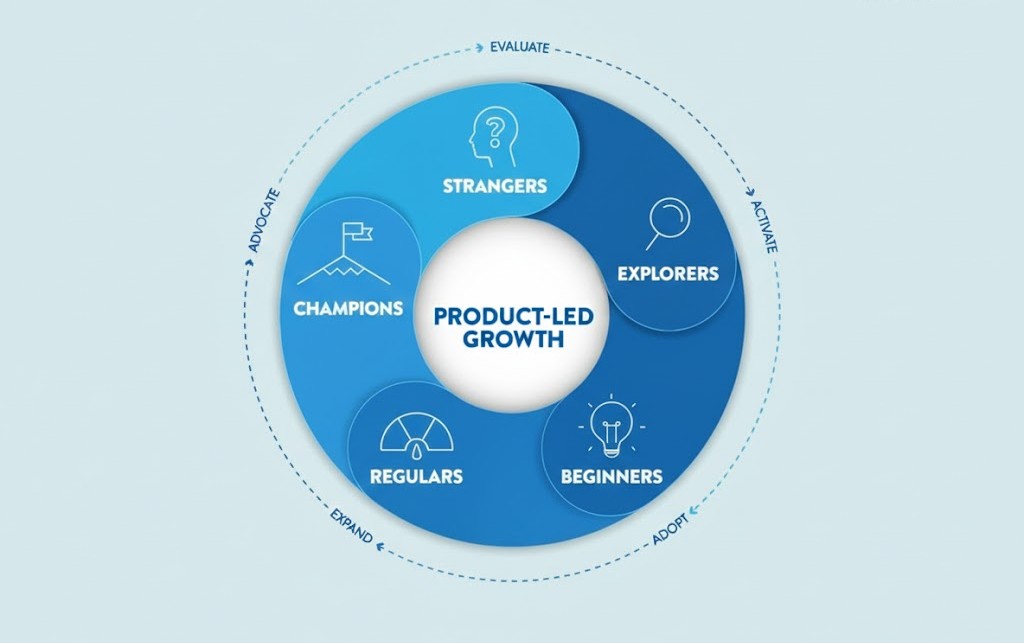

Product-Led Growth: Let Your Product Do the Selling
Slack, Dropbox, Zoom, Figma—these companies didn't grow by hiring massive sales teams. They grew because people tried the product, liked it, and told their coworkers. That's product-led growth in a nutshell: your product is the sales pitch.
Instead of convincing people your product is valuable, you let them experience it. Free trials, freemium tiers, self-service signup. Users get in, see the value, and upgrade when they're ready. No demo calls required.
How It's Different
Traditional SaaS: Marketing generates leads → Sales qualifies them → Demo happens → Contract negotiation → Maybe they use the product.
Product-led: User signs up → Uses the product → Experiences value → Upgrades when it makes sense → Invites teammates.
The product does the convincing. Sales (if you have them) focuses on users who are already engaged, not cold prospects.
The best marketing is a product that sells itself.
Why It Works
Cheaper to acquire customers. When your product does the selling, you need fewer salespeople. PLG companies often have acquisition costs 50-75% lower than sales-led competitors.
Faster sales cycles. Users can evaluate your product in days instead of months. No procurement committees, no executive sign-offs for initial adoption.
Built-in virality. Good products spread. Collaboration features mean users invite teammates. Shared files mean external people see your product. Every user becomes a potential growth channel.
It compounds: users try it → get value → adopt more features → invite others → hit limits → upgrade → become advocates. Each cycle feeds the next.
The Building Blocks
Zero-Friction Signup
No sales calls. No lengthy forms. No credit card upfront. Sign in with Google, land in the product, start doing things. The best PLG products get you from "I'm curious" to "I'm using it" in under a minute.
Fast Time to Value
Users need to experience the "aha moment" quickly—within minutes, not days. Figure out what successful users do in their first session and optimize the path for everyone to follow it.
Onboarding That Actually Works
Your onboarding is your sales pitch now. Interactive tours, contextual tooltips, checklists, sample data—whatever it takes to get people to value fast. PLG companies obsess over activation rates because that's where the money is.
Pricing That Makes Sense
Free tiers let people start. Upgrades happen when users hit natural limits or want premium features. Common models:
- Freemium — Free forever with paid upgrades (Slack, Dropbox)
- Free trial — Full access for limited time (Asana)
- Usage-based — Pay for what you use (AWS)
- Seat-based — Pay per user (most B2B SaaS)
Viral Loops
The best PLG products get better when more people use them. Slack channels need teammates. Figma designs get shared. Zoom meetings require participants. Build features that naturally pull in new users.
Upgrade Paths in the Product
Don't make people hunt for pricing or schedule a call to upgrade. Show upgrade options when users hit limits, try premium features, or reach milestones. Make it easy to say yes.
What to Measure
- Signup conversion — What percentage of visitors create accounts?
- Activation rate — What percentage reach the aha moment?
- Time to value — How long does that take?
- Free-to-paid conversion — What percentage upgrade?
- Viral coefficient — How many new users does each user bring?
- Net revenue retention — Are existing customers growing or shrinking?
Making the Switch
If you're currently sales-led, going PLG isn't just a marketing change—it's a product change.
Make it self-service. Users should be able to sign up, onboard, and get value without talking to anyone. That means better UI, clearer onboarding, contextual help, self-service billing.
Create a real free tier. Not a crippled demo—something that actually solves a problem. Users need to experience genuine value before they'll pay.
Instrument everything. You can't optimize what you don't measure. Track user actions, funnel conversions, activation events. PLG runs on data.
Build viral mechanics. Collaboration, sharing, invites. Every user should be a potential source of new users.
Redefine sales. Sales doesn't lead anymore—they follow product signals. Focus on users who are already engaged and showing buying intent, not cold outreach.
Common Mistakes
Feature dumping. Showing everything at once overwhelms people. Focus on core value first.
Useless free tier. If free users can't accomplish anything real, they won't convert. Give them enough to solve an actual problem.
Ignoring activation. Signups are vanity metrics. Activation is what matters. Optimize for users who actually experience value.
Single-player products. Products that work alone are harder to grow virally. Add collaboration features that pull in other users.
Getting Started
Audit your current experience. Can someone sign up and get value without talking to a human? How long does it take? Where do they get stuck?
Find your natural upgrade points—where do free users hit limits that paid plans solve? Build the upgrade path there.
Set up analytics. Measure activation, conversion, retention. Use that data to improve each step.
Tools like GuideWhale help accelerate PLG by improving onboarding, driving feature adoption, and giving you the analytics to optimize the whole journey from signup to power user.