 GuideWhale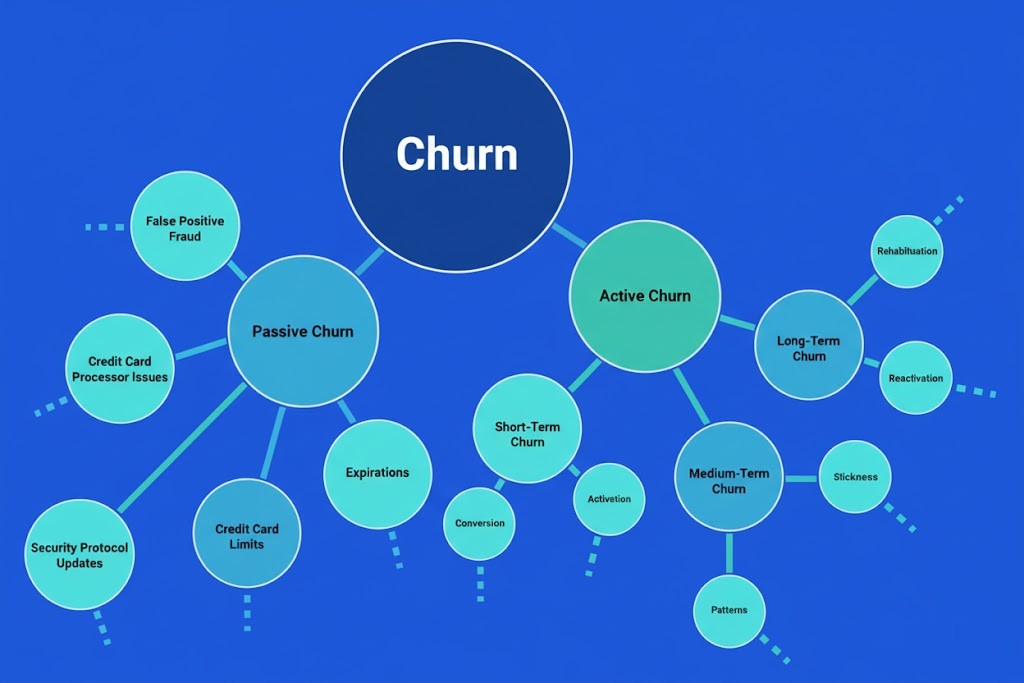

Churn Is Killing Your Growth (Here's How to Stop It)
Every customer you lose erases the work you did to acquire them. And replacing them costs way more than keeping them would have. A 5% improvement in retention can boost profits by 25-95%—yet most SaaS companies lose 5-7% of customers every single month.
Churn is the leak in your bucket. You can pour in more water (acquire more customers), but until you fix the hole, you're just running in place.
Not All Churn Is the Same
Before you can fix it, you need to understand what kind of churn you're dealing with:
- Voluntary — They actively canceled. Wrong fit, found something better, didn't see value.
- Involuntary — Their card expired or payment failed. They didn't mean to leave.
- Early-stage — Gone within 30 days. Onboarding failed them.
- Late-stage — Long-time customers leaving. Something changed.
Each type needs a different fix. Treating them all the same won't work.
Reducing churn by 1-2% doesn't sound like much, but it compounds. Small improvements add up to big revenue over time.
Catch At-Risk Customers Before They Leave
Don't wait for the cancellation email. Watch for warning signs:
- Login frequency dropping
- Features they used to rely on going untouched
- More support tickets than usual
- Fewer team members using the product
- Failed payment attempts
If you can spot these patterns 30-60 days before someone churns, you have time to do something about it.
Fix Your Onboarding
Most early churn happens because users never experienced value. They signed up, poked around, got confused or bored, and left. The fix is getting them to the "aha moment" faster.
- Interactive walkthroughs for the important stuff
- Personalization based on what they're trying to accomplish
- Help exactly where they get stuck
- Celebrate when they complete meaningful actions
Track your activation rate. If people aren't reaching value, nothing else matters.
Reach Out Before They Give Up
When you spot an at-risk customer, don't wait for them to contact you. Be proactive:
- Automated emails highlighting features they haven't tried
- In-app tips when they seem stuck
- Personal outreach for high-value accounts
- Case studies showing how similar customers succeed
Timing matters. Reach out while they still care enough to listen, not after they've mentally checked out.
Stop Losing Customers to Failed Payments
This one's embarrassing: 20-40% of churn at many SaaS companies is just payment failures. Cards expire. Transactions get declined. Users don't even know they've been cut off.
- Retry failed payments automatically over several days
- Warn people before their card expires
- Send multiple reminders about payment issues
- Give a grace period before cutting access
Stripe and other payment processors have built-in tools for this. Use them.
Keep Reminding People Why They're Paying
People don't usually churn because they tried your product and decided it wasn't worth it. They churn because they stopped using it and forgot why they signed up.
- Announce new features and explain why they matter
- Send usage reports showing value delivered
- Share tips about features they're not using
- Show success stories from similar customers
Regular touchpoints keep your product top of mind.
Build Relationships, Not Just Accounts
Customers who have a relationship with someone at your company are less likely to leave. They'll give you the benefit of the doubt when things go wrong. They'll tell you about problems before canceling.
- Assign success managers to high-value accounts
- Check in quarterly to discuss goals and outcomes
- Respond fast to support requests
- Ask for feedback and actually act on it
Make Cancellation a Conversation
When someone tries to cancel, don't just let them go. A good cancellation flow saves 15-25% of would-be churners:
- Ask why they're leaving (and use that data)
- Offer alternatives—discount, downgrade, pause
- Make it easy to come back later
Some cancellations are healthy—bad-fit customers should leave. Focus on saving the ones who are leaving for fixable reasons.
Sometimes It's a Product Problem
If churn is high across all segments, NPS is low, and customers keep saying they're "not getting value"—you might have a product-market fit issue, not a retention issue.
No amount of onboarding optimization fixes a product that doesn't solve a real problem well enough. Sometimes you need to step back and address the fundamentals.
What to Track
- Monthly churn rate — Percentage of customers who cancel
- Revenue churn — Percentage of MRR lost (this matters more than logo count)
- Cohort retention — Is retention improving for newer customers?
- Net retention — Expansion minus churn (should be over 100%)
Where to Start
Figure out your actual churn rate and where the biggest leaks are. Early-stage? Payment failures? Competitive losses? Feature gaps?
Pick 2-3 strategies that address your specific problems. Implement them, measure results, iterate.
Tools like GuideWhale help by improving onboarding, driving feature adoption, and flagging at-risk users through behavioral analytics—so you can see problems coming and do something about them.